Financial Performance Dashboard: 101023442, 101030500, 101040500, 104439950, 105517881, 107502735

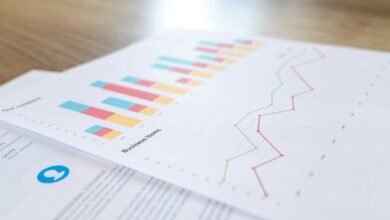
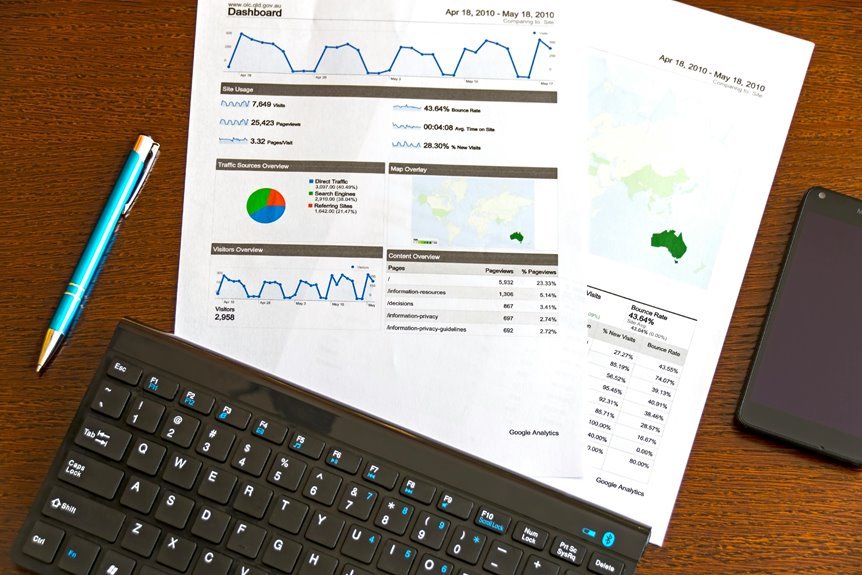
The financial performance dashboard for identifiers 101023442, 101030500, 101040500, 104439950, 105517881, and 107502735 offers a structured analysis of essential financial metrics. It consolidates revenue growth, profit margins, and ROI into a cohesive visual format. This enables stakeholders to assess performance trends efficiently. However, the implications of these metrics on strategic decision-making and fiscal health warrant further examination to truly understand their impact on organizational growth.
Understanding Financial Performance Metrics
How can organizations effectively gauge their financial health?
By employing financial ratios and performance indicators, businesses can obtain a quantitative assessment of their fiscal standing.
Key ratios such as liquidity, profitability, and solvency provide insight into operational efficiency and risk levels.
These metrics enable organizations to make informed decisions, ensuring they maintain a trajectory toward financial freedom and sustained growth.
Benefits of Utilizing a Financial Performance Dashboard
While many organizations recognize the importance of financial metrics, the implementation of a financial performance dashboard offers significant advantages that can transform data into actionable insights.
Enhanced data visualization facilitates quick comprehension of complex financial information, supporting effective decision making. By consolidating diverse data sources, these dashboards empower stakeholders to identify trends, monitor performance, and make informed choices that drive organizational success.
Key Data Points for Performance Analysis
A comprehensive financial performance analysis hinges on the identification of key data points that provide critical insights into an organization’s fiscal health.
Essential performance indicators, such as revenue growth, profit margins, and return on investment, can be effectively showcased through data visualization techniques.
These tools enable stakeholders to quickly grasp complex information, facilitating informed decision-making and promoting strategic financial freedom within the organization.
Conclusion
In conclusion, the financial performance dashboard serves as a modern-day oracle, revealing insights akin to the prophecies of ancient seers. By synthesizing critical metrics such as revenue growth, profit margins, and ROI, it empowers stakeholders to navigate the complex landscape of financial decision-making. This analytical tool not only enhances operational efficiency but also fortifies strategic planning, ensuring that organizations remain resilient and poised for growth in an ever-evolving fiscal arena.